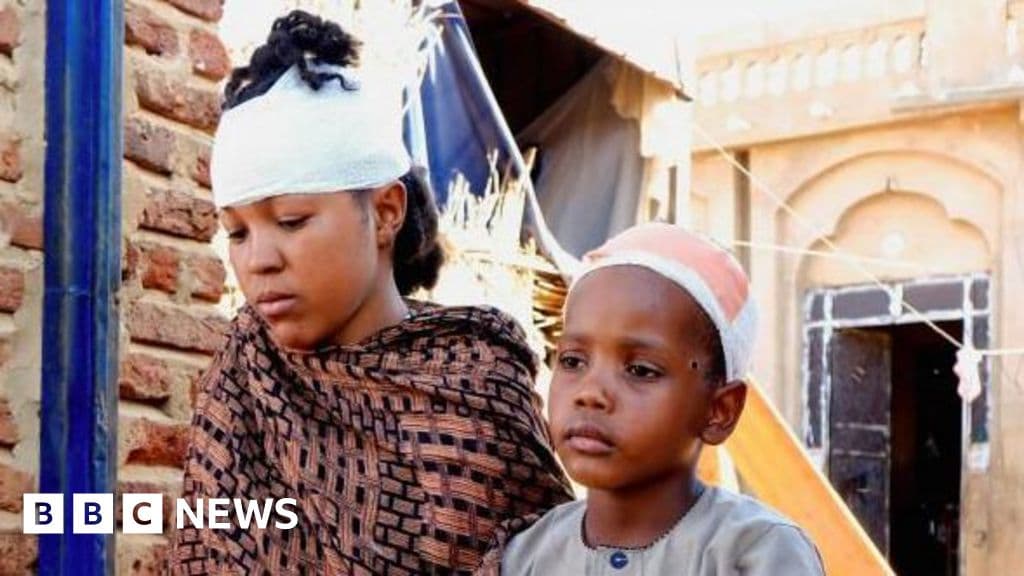
A 27-year-old university student, Sarah was at a crowded fuel station in the city of el-Obeid, on the front line of Sudan's civil war, when a drone struck without warning.
She says the station lit up before everything went dark. "In front of us there were injured people, blood, burnt cars, and smashed cars."
We have withheld the student's real name for her safety in a city that is the latest flash-point in the three-year war between the army and the paramilitary Rapid Support Forces (RSF).
Sarah told the BBC by phone that she was fortunate to survive the attack, but had sustained injuries. "I got shrapnel in my leg and hand because I was outside the car when the second missile struck."
Currently under army control, el-Obeid - the capital of North Kordofan state with a population of around 500,000 - has one of the largest military bases in central Sudan.
But the army has been unable to repel the drone strikes, with 27 hitting the city in June, the highest monthly total since the conflict began, according to violence monitoring group Acled.
UN human rights chief Volker Turk said at least 45 people were killed and 41 injured in 15 drone strikes between 6 and 28 June.
He added that the city has been under siege-like conditions for 18 months, with summary executions, abductions, torture and sexual violence taking place along routes used by people fleeing the conflict.
"The signs from el-Obeid are clear and unmistakable: Another human rights catastrophe is unfolding in Sudan," Turk said last week in an address to the UN Human Rights Council in Geneva.
A doctor at a hospital in the city told the BBC they were struggling to cope with the influx of casualties. "We receive injured patients after almost every drone attack."
One of the most distressing cases the doctor has treated was a seven-month old baby. "Her hand had to be amputated because of the severity of the injury, but sadly she did not survive."
"The situation is frightening. You leave your house as if you will never return," the doctor said. "We are really suffering from the drones - no-one knows how and when they will die."
Among those who moved to the city is a humanitarian worker whom we have named Ahmed. He first fled Kadugli, then Khartoum, and now fears he will have to leave el-Obeid as drone strikes intensify.
"People are always in shock and fear. They are unable to sleep," he told the BBC. "When the drones are flying overhead, making that noise, every night becomes a sleepless night."
Sarah said many people were scared to step out of their homes. "People now leave their homes saying goodbye to their families because they don't know if they will return or not."